
Skip to content

Guide · 6 min read

Why Is My Car Shaking When I Brake at High Speeds?

The short answer

Shaking when braking at highway speed is almost always caused by warped or unevenly worn brake rotors. Less often it's a sticking caliper, worn suspension bushings, or loose wheel bearings. Resurfacing or replacing rotors fixes most cases for $250–$450 per axle.

Highway braking vibration explained: rotors, calipers, suspension, and tires. This guide covers Warped brake rotors — the #1 cause; Other causes of brake vibration; Steering wheel vs. seat shaking so you can describe the problem and decide what to check next.

Brake Repair: a closer look

1 / 3
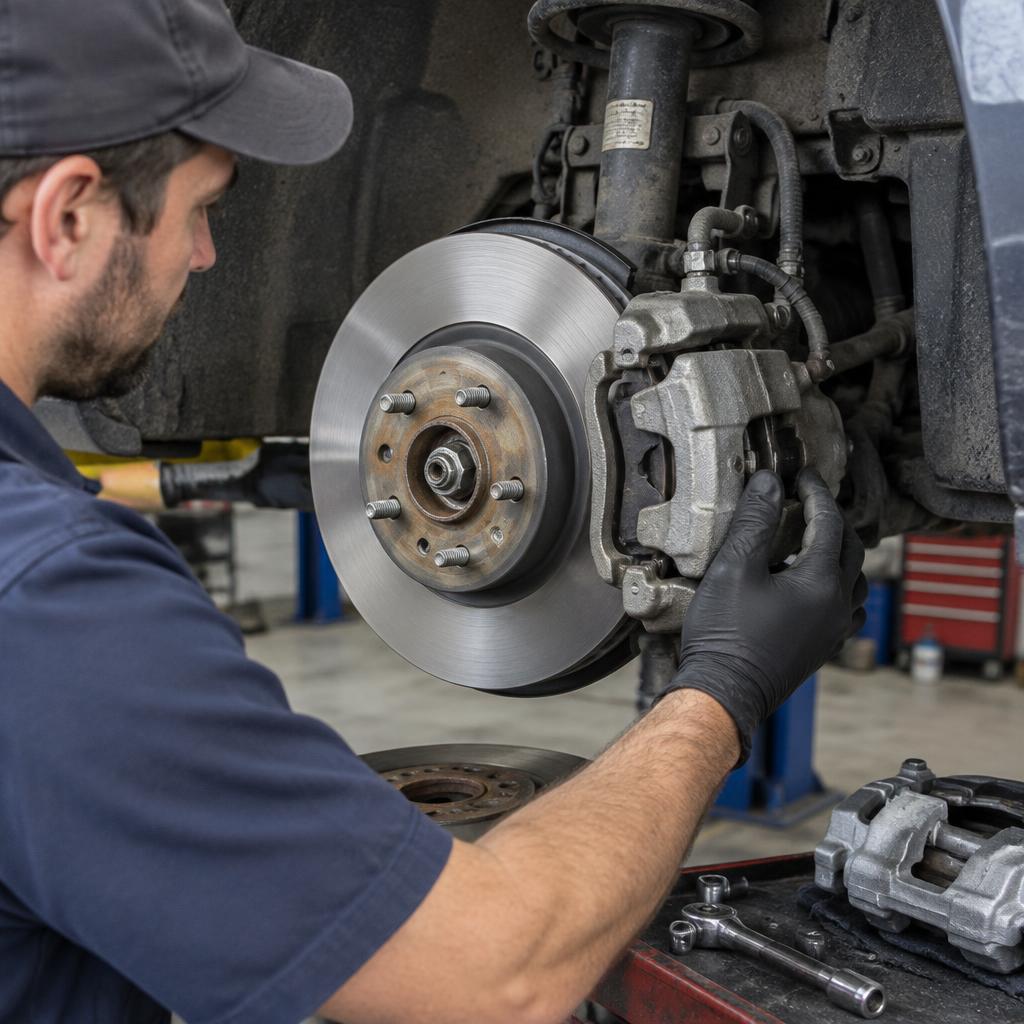
Illustration of a mechanic working on a brake rotor and caliper

Brake components

Pads, rotors and calipers are inspected together when investigating braking symptoms.

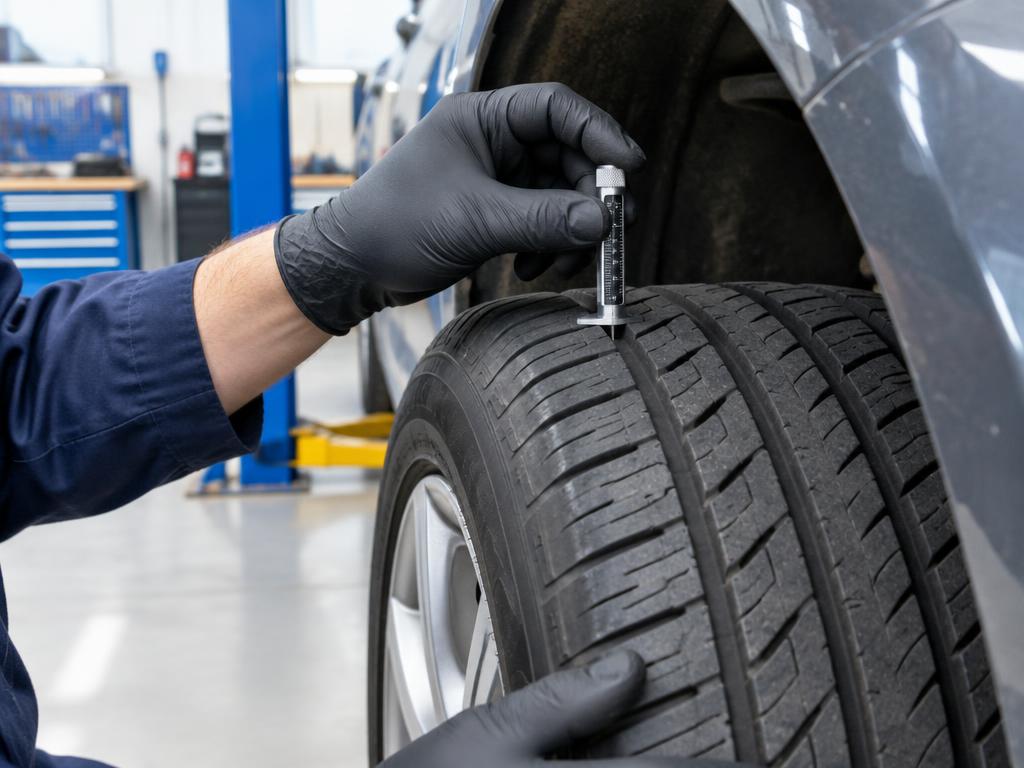
Illustration of a technician measuring tire tread depth

Tire tread inspection

Tread condition and wear patterns provide clues when checking tires and suspension.

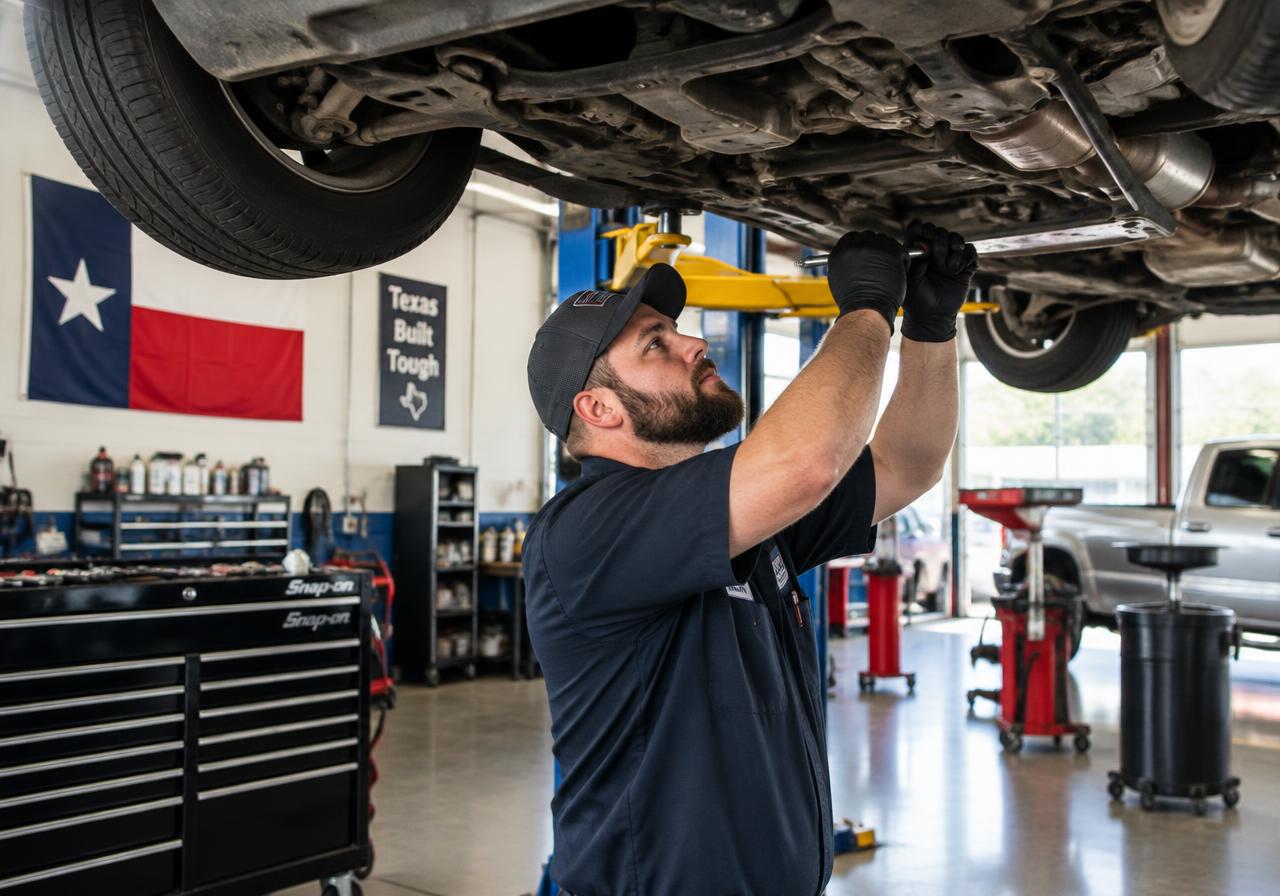
Illustration of a technician inspecting a vehicle on a lift

Hands-on inspection

A hands-on inspection helps connect the driver's symptoms with the vehicle's condition.

Illustrative images, not customer repair photographs.

Warped brake rotors — the #1 cause

Heavy braking down long grades or in stop-and-go I-35 and I-45 traffic heats rotors unevenly. The result is thickness variation you feel as pulsing in the pedal and shaking in the steering wheel.

Other causes of brake vibration

A sticking caliper keeps a pad dragging and overheats one rotor. Worn control arm bushings or tie rods let the wheel shift under braking. Improperly torqued lug nuts can also distort rotors.

Steering wheel vs. seat shaking

Shaking felt in the steering wheel points to the front brakes. Shaking felt in the seat or pedal only points to the rear. This helps your technician narrow the diagnosis.

Need brake repair?

Pads, rotors, calipers, lines, and ABS — stop safely again. Typical cost: $149 – $450 per axle (pads & rotors).

See our brake repair service →

Frequently asked questions

Short-term yes, but stopping distances can increase. Schedule a repair soon.

If they're above minimum thickness, yes.

Usually improper lug nut torque or bedding — we torque to spec with a wrench, not an impact gun.

Related guides

Car trouble? We're open until 11:45 PM, every day.

Call now for a free quote and same-day service across Texas.

Call 469-402-3923